 Tideline Research Institute
Tideline Research Institute
Tideline Research Institute
Environmental Spotlight
PCB contamination, fish consumption, and the need for better public awareness.
Environmental Spotlight No. 003
By Tideline Research Institute
For many Virginians, fishing is more than a pastime. It is a tradition, a source of food, and a way to spend time with family along the rivers that define our communities. Along the Appomattox River near Petersburg and Dinwiddie, anglers can often be found casting from parks, riverbanks, bridges, and public access points throughout the year.
What many people may not realize is that portions of Virginia waterways are covered by fish-consumption advisories because certain fish species contain elevated levels of contaminants, including polychlorinated biphenyls, commonly known as PCBs.
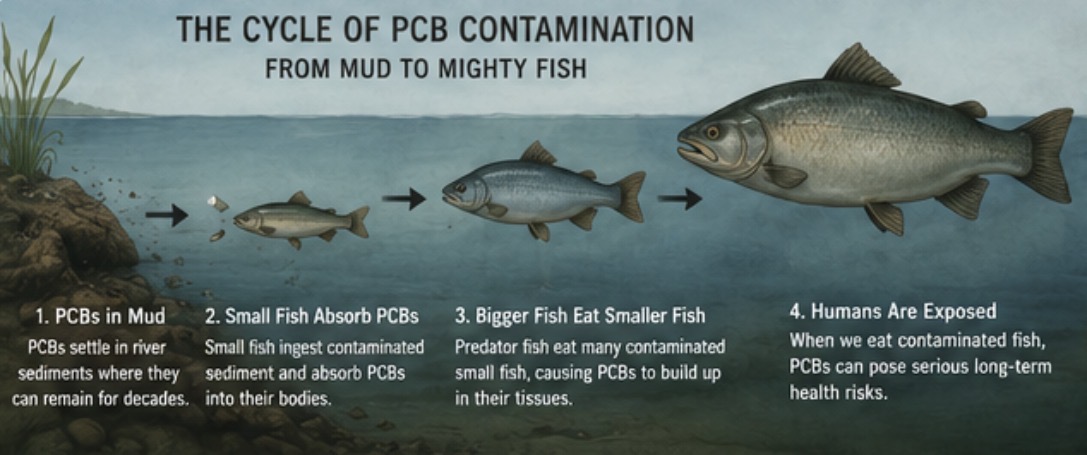
PCBs are industrial chemicals that can remain in the environment for decades. Once they enter a river system, they may settle into sediments and gradually move through the food chain. Smaller organisms and fish can absorb PCBs from contaminated sediment and food. Larger fish then eat the smaller fish, allowing PCB concentrations to build in their tissues over time.
PCBs were once widely used in electrical equipment, industrial systems, and other manufactured products. Although their manufacture was prohibited in the United States decades ago, they do not disappear quickly.
PCBs can remain trapped in river sediment and continue entering aquatic food webs long after the original release occurred. Larger and older predator fish may contain higher concentrations because they have consumed contaminated prey throughout their lives.
Long-term exposure to PCBs has been associated with serious health concerns, including effects on the immune, nervous, reproductive, and endocrine systems. Health agencies therefore issue fish-consumption advisories to help the public reduce unnecessary exposure.
Publishing an advisory online is important, but information is only useful when people know it exists.
Many individuals who regularly fish affected waterways may never visit a state agency website before deciding whether to keep and eat their catch. Some may depend on locally caught fish as an important and affordable source of food. Others may be unfamiliar with the meaning of a fish-consumption advisory or may not know which species and locations are included.
This creates a basic public-health problem:
How can people follow an advisory they have never seen?
Fish-consumption information should be visible where fishing actually occurs.
Clear signs at public access points, boat ramps, fishing areas, bridges, parks, and commonly used riverbanks could give anglers immediate notice that an advisory exists. Signs should identify the affected waterway, explain which fish species are included, provide current consumption recommendations, and direct visitors to updated information.
Effective notification may also require:
Environmental monitoring requires funding, but public communication requires funding too.
Collecting fish-tissue samples and publishing technical results are only part of the job. Communities also need resources for signage, translation, outreach events, printed materials, digital education, community partnerships, and continued updates as advisory information changes.
Funding should support not only the study of contamination, but also the direct communication of risk to the people most likely to be exposed.
This is especially important for individuals and families who frequently consume locally caught fish. These communities may experience repeated exposure over long periods, making clear and accessible education essential.
The absence of visible advisory information at frequently used fishing locations can leave a serious gap between environmental science and public understanding.
A contaminant may be invisible. The fish may look healthy. The water may appear calm and clean. Without clear notification, an angler may have no reason to suspect that consumption limits have been recommended.
That is why public awareness cannot depend entirely on individuals finding technical information on their own.
Tideline Research Institute supports a coordinated approach that includes:
Environmental science should not end when laboratory results are published.
The public deserves information that is visible, understandable, current, and available where decisions are being made. Protecting communities from PCB exposure requires both scientific monitoring and meaningful communication.
Clean and healthy waterways are not measured only by chemistry. They are also measured by whether the people who use those waterways are informed, protected, and empowered to make safe choices.
Environmental Spotlight Series
Issue No. 003
Tideline Research Institute