Water Quality
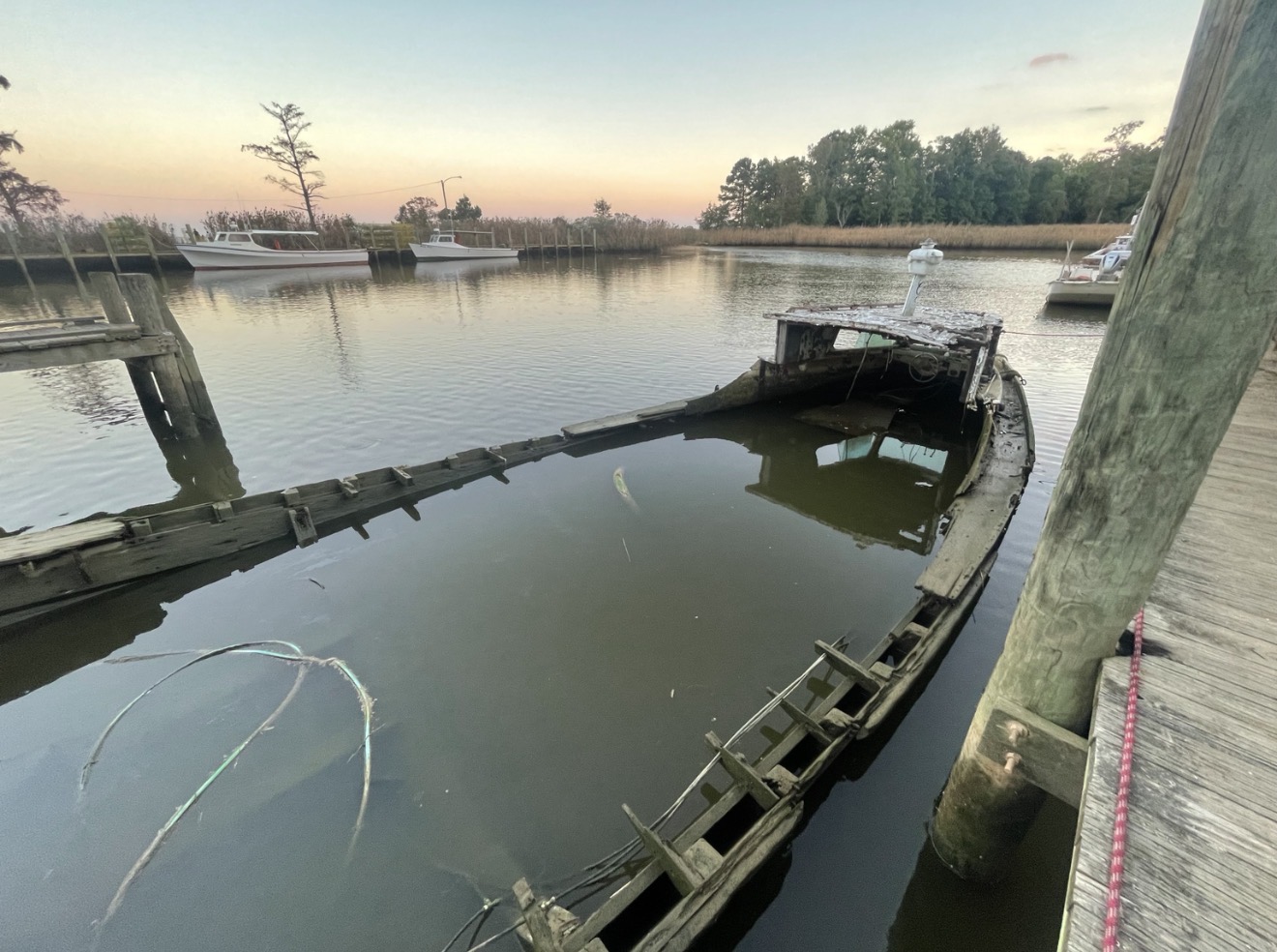
Monitoring rivers, streams, wetlands, and lakes through field testing and documented sampling.
 Tideline Research Institute
Observe. Research. Protect.
Tideline Research Institute advances environmental understanding through field science, laboratory analysis, wildlife documentation, photography, and public education.
Explore Our ResearchWho We Are
Our mission is to advance the understanding, conservation, and restoration of natural ecosystems throughout the Mid-Atlantic while promoting healthy waterways for our children.
Core Research
Monitoring rivers, streams, wetlands, and lakes through field testing and documented sampling.
Ethical observation and photographic documentation of wildlife and habitat conditions.
GIS, fixed-point photography, and long-term records of environmental change.
Quality-controlled analysis supported by documented procedures and chain of custody.
Programs
Repeat sampling and visual documentation at selected waterways.
Training volunteers to collect useful observations safely and responsibly.
Public demonstrations, student experiences, and accessible scientific reporting.
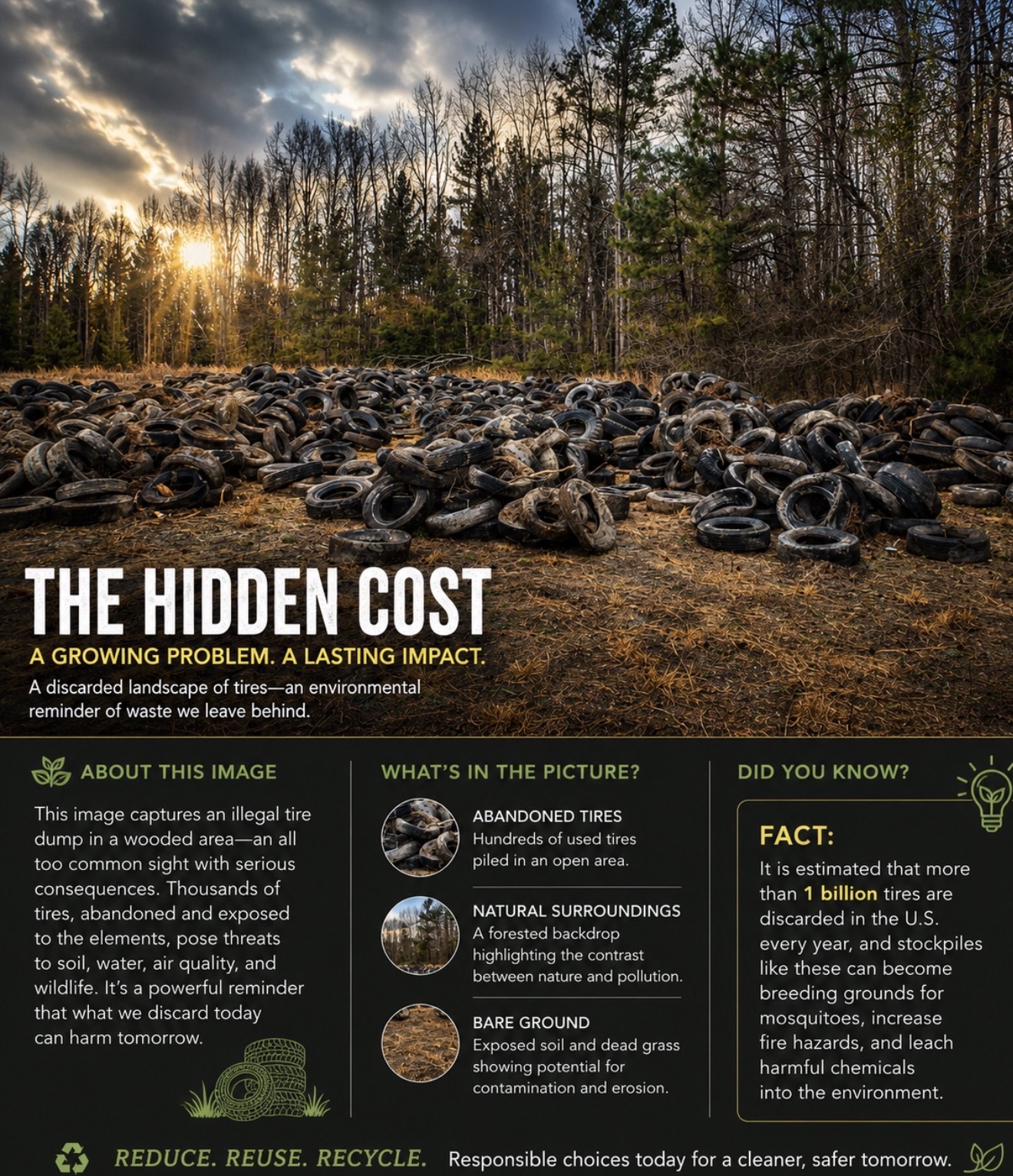
Every discarded tire represents more than litter—it can become a long-term environmental hazard affecting soil, water, wildlife, and public health. Tideline Research Institute is committed to educating communities about pollution and promoting responsible stewardship of our natural resources.
Environmental Spotlight
PCBs can remain in river sediments for decades, moving through the food chain from small aquatic organisms to larger fish consumed by people. Understanding this process is essential for protecting both public health and our waterways.
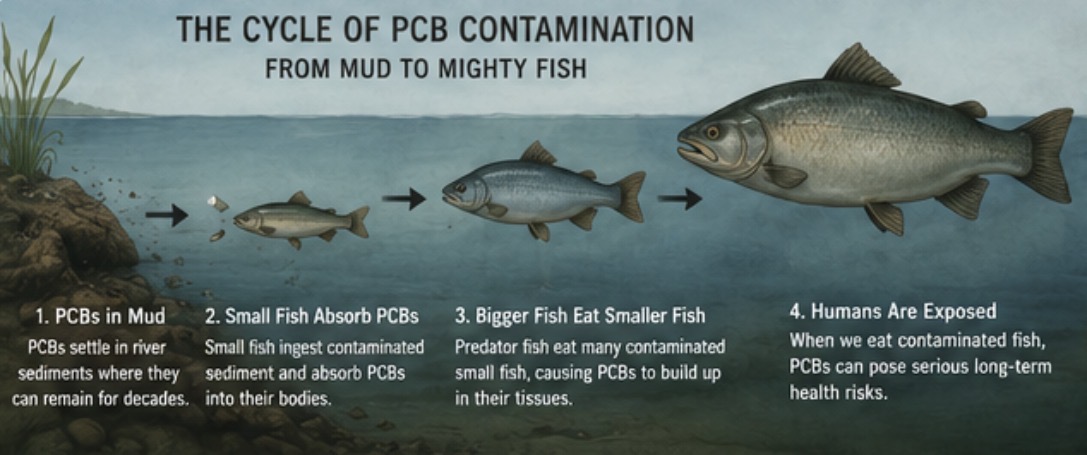
Learn how PCB contamination persists in aquatic ecosystems, why fish consumption advisories matter, and why greater public education and funding are needed to help protect communities that regularly fish Virginia's rivers.
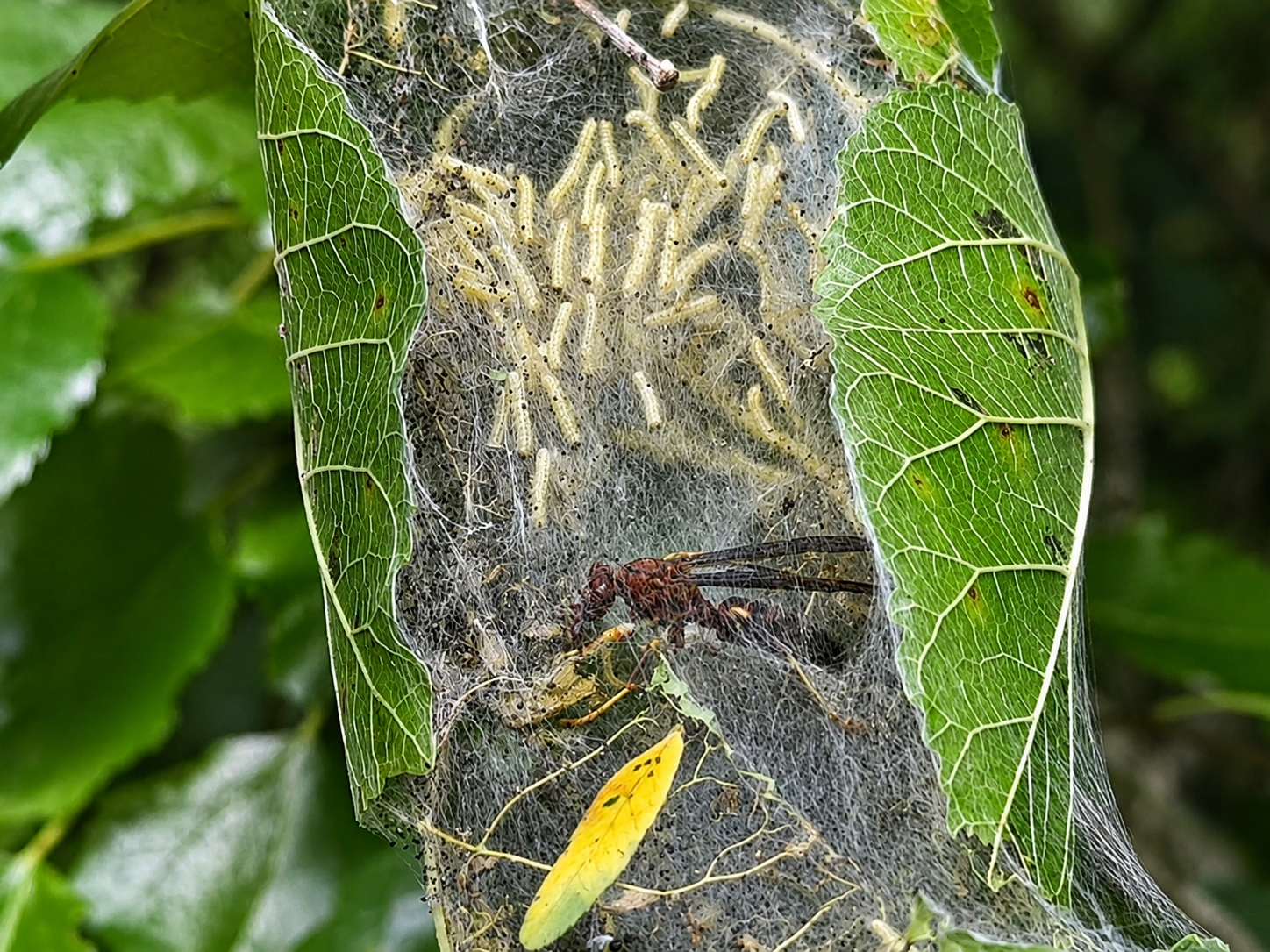
For millions of years, nature has controlled insect populations without synthetic pesticides. One of its most effective—and least appreciated—tools is the predatory wasp.
While wasps are often viewed as aggressive insects, many species spend their lives hunting caterpillars, beetle larvae, flies, and other insects that can overwhelm forests, gardens, and crops if left unchecked. By naturally reducing these populations, wasps help maintain ecological balance while protecting native vegetation.
This field observation captures a remarkable moment: a predatory wasp feeding inside a silk caterpillar nest. Although these nests appear to provide complete protection, specialized wasps are able to locate and enter them, helping prevent large outbreaks of leaf-eating caterpillars before they can strip surrounding trees and shrubs.
Unlike chemical pesticides, natural predators do not spread synthetic chemicals through soil, waterways, or surrounding habitat. Every successful hunt is part of a larger natural system that helps reduce the need for artificial intervention while supporting healthier, more resilient ecosystems.
As concerns continue to grow over pesticide use, pollinator decline, and chemical runoff, observations like this remind us that many of nature's own solutions have been quietly working for millions of years. Protecting biodiversity does more than preserve wildlife—it protects the natural systems that help keep the environment in balance.
Sometimes the smallest predators perform the biggest jobs.
PUBLIC HEALTH SPOTLIGHT
Sometimes protecting wildlife also means protecting people. A single field observation can make the difference between a preventable exposure and a tragic outcome.
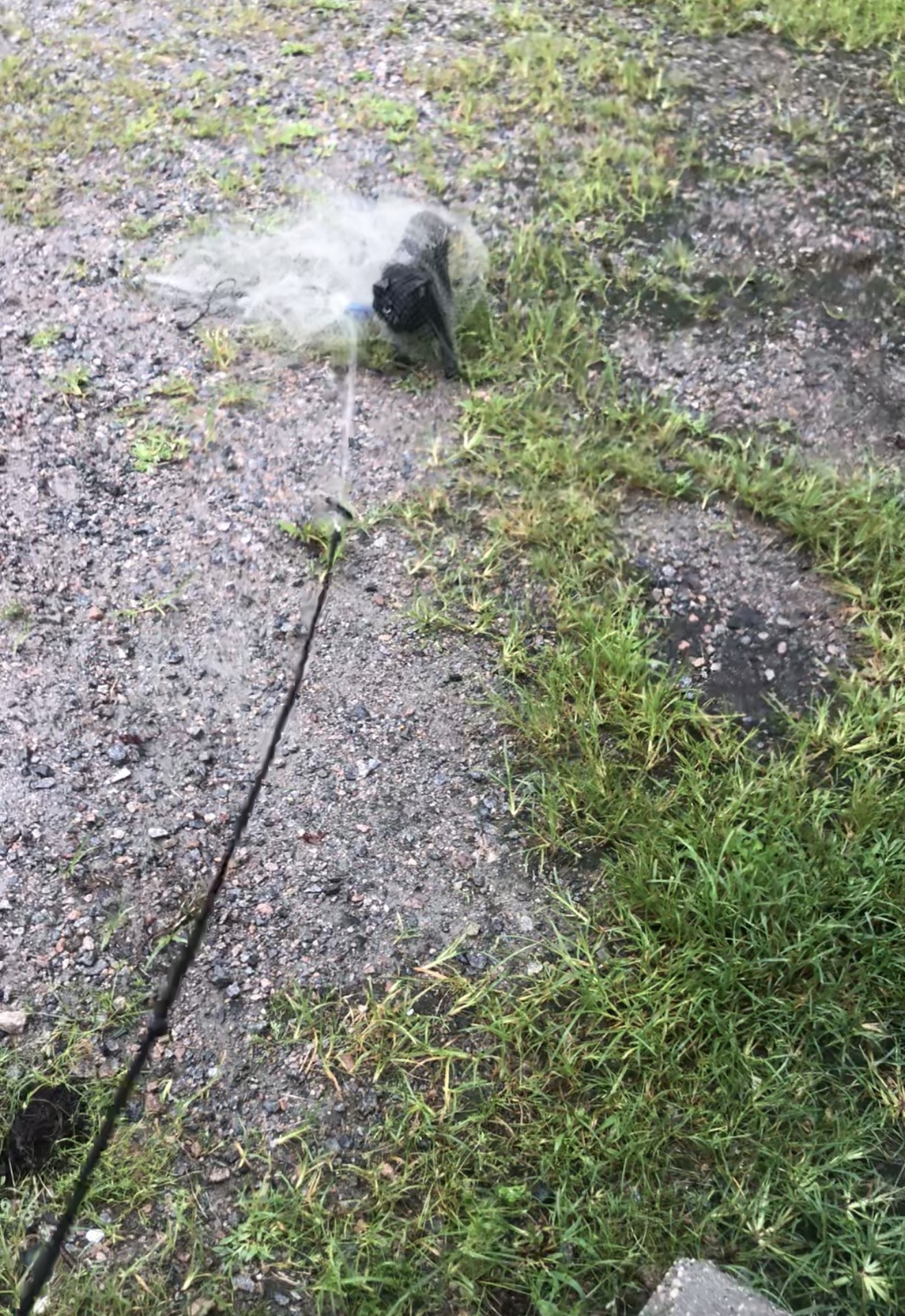
While conducting field observations, Tideline Research Institute encountered a domestic cat displaying behavior that local residents described as highly unusual. According to nearby residents, the cat had recently approached and scratched an individual despite normally avoiding people.
Abnormal behavior in mammals—including the sudden loss of fear toward humans—can be one warning sign associated with rabies infection. Although many illnesses can cause unusual behavior, any unexpected aggression or unexplained interaction with wildlife or unfamiliar animals should be treated seriously.
Out of an abundance of caution, the individual who had been scratched was encouraged to seek immediate medical evaluation while the animal was safely captured without unnecessary harm using a cast net. Local authorities later assumed responsibility for the investigation.
Several days later, laboratory testing confirmed that the animal was positive for rabies.
Because medical treatment was sought immediately following the exposure, the individual recovered successfully.
Rabies remains one of the deadliest viral diseases known. Once clinical symptoms begin, survival is extremely rare. Fortunately, rabies is also one of the most preventable diseases through routine pet vaccinations and rapid medical treatment following potential exposure.
Environmental stewardship extends beyond protecting habitats—it also includes recognizing situations where wildlife diseases may threaten public health. Careful observation, responsible reporting, and cooperation with local authorities can help protect both people and wildlife.
Publications
Our planned annual report will combine water chemistry, wildlife observations, habitat assessments, maps, photography, and conservation findings.
Field Gallery
Connect
Partnership, volunteer, research, and media inquiries are welcome.
North Dinwiddie, Virginia 23803